

Although Scandinavian history and mythology are interesting, Sweden has a different place and position in this geography. Sweden is a country that stands out with its high rank among the happiest countries in the world, its economic power and nature. In addition to these, Sweden is one of the countries where many people want to live in the future, performing exemplary practices in terms of living conditions and human rights. So how did Sweden come to this position? Let’s analyze it together.
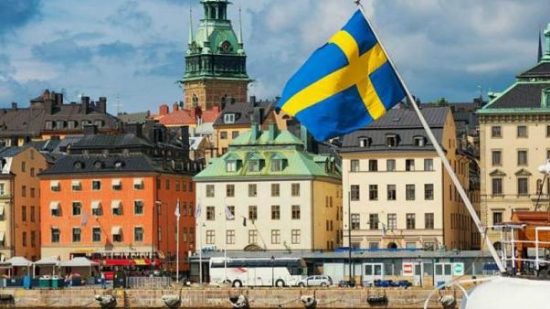
First of all, 1800s has many important ways. Because in this period, until the years 1800-1900, we do not encounter an economically good Sweden. Sweden, which directed its economy only to agriculture, emigrated especially to America from the 1800s until 1950 due to the bad course of its economy. Some sources state that around 1 million Swedish left their homeland due to poor economic conditions. In the following period, the economy started to gain momentum and the level of welfare increased with the diversification of products in agriculture and focusing on industry and education. It cannot be denied that their relatively small population also has an accelerating effect on recovery.
However, as I mentioned in the title of the article, the subject I will focus here will be on the individualization of the Swedish people and the impact this new trend has on society and the level of welfare.
The idea of individualization and the post-trend came to the fore with the idea of a group of politicians in Sweden in 1972. Because this ideology put forward the thesis that social welfare can only rise with individual freedom and the reduction of people’s dependence on each other. Moreover, this ideology argued that it is the economy that actually binds people together. For example; Staying with family mambers together was for economic rather than emotional reasons. Because people who could not find enough opportunities economically lived more collectively. Another issue that this ideology defended was that parents were attached to their children after they got older and the desire to live together with this in mind was dominant. To sum up; While children were dependent on their parents due to economic concerns, the parents were dependent on their children in old age. Likewise, the fact that women were economically addicted on their husbands during the marriage period was another important problem that reduced the contribution of women to the country’s economy. Politicians who defended this ideology frequently expressed that this vicious circle at the base of family life was an important factor in the development of that period.
 With this doctrine put into practice in 1972, Sweden radically changed the family life. More precisely, the concept of family has disappeared. In fact, politically, giving people the opportunity to be free has caused the practice to spread very quickly to major scale of society. Parents could be taken to nursing homes after a certain age and they could remain active again by socializing in similar age groups. Similarly, the rapid integration of women into the labor force and their gaining economic freedom eliminated the patriarchal understanding and ensured that women and men attained the same human rights. In other words, economically, they no longer needed men. With the aim of taking own independence of individuals and not to be dependent on anyone, the quality of education was improved with this doctrine, the need for each other was reduced and redesigned at equal plane as throughout the country. In short, this doctrine pointed out that the independence and development of the country would not be possible without individual freedom and development.
Undoubtly, this situation had many effects. People get difficult in making an emotional relationship in Sweden. Studies show that approximately 40% of the Swedish people live alone and similarly die alone. Because of going bad, people who spend time with older persons whom have last minutes before dying have started to be employed.
There have also been radical changes in marriage and other relations. When women wanted to have children, they started to have children through sperm banks without having physical contact with a man. Similarly, this situation is solved by the surrogate mother for men, too.
Another aspect of the issue is the integration process of individuals who stayed in Sweden after education or came to Sweden as immigrants. On average, a person’s adaptation process in Sweden takes 7 years to complete, which is the longest in the world.
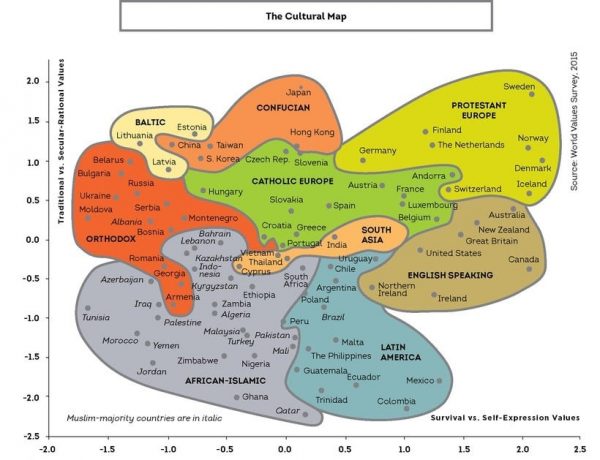 In the cultural map in the figure, the horizontal axis constitutes the scale between survival and the freedom of self-expression, while the comparison of traditional values with the secular understanding is made on the vertical axis. When we look at the position of Sweden, it will not be a coincidence that it is in the upper right corner.
When we examine the position of Turkey, it is possible to make some comparisons. However, what this graphic explains in general is that individual rights and freedoms develop, people can express themselves, and when a secular line from traditional and conservative understanding is passed, the welfare of the society will increase at that scale. This study was conducted in 2015, not only Turkey, but also shows the situation in the African-Islamic geography.
Another analysis that we can make based on the graph is that Northern European countries have the top places in the world rankings at the level of individualization and welfare. I personally think that climate features also come into play here.
To sum up; Individualization and increase in welfare isolate individuals socially, cause difficulties in communication and cause the traditional concept of family to disappear. Also, the notions of economy, human rights and democracy step forward in inverse proportion.