
Although nature is challenging for all living forms, the miracles it contains are just as many. Mankind, struggling with many diseases from birth to death, is taking important steps every day in order to discover the opportunities that nature offers us to regain health.
Studies on Turmeric in recent years have shown that this spice can prevent brain degeneration, which causes dementia and Alzheimer’s in later ages, and has led to the emergence of new approaches on treatment methods. Before going into the details of these studies on turmeric, let’s take a closer look at what Alzheimer is.
In 1906, Dr. Alois Alzheimer identified memory losses and abnormal behaviors especially in elderly individuals, upon examining the causes, he analyzed the brain tissues of patients and found that their brain volumes decreased significantly.
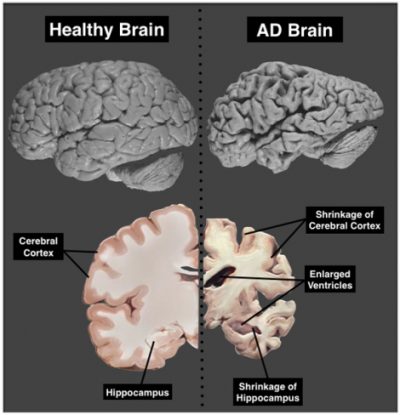
In the studies conducted after this process, the causes of Alzheimer’s have started to be better understood. As the age progresses, the accumulation of tau proteins and amyloid beta plaques in nerve cells in the brain causes to be impaired the ability of recall and direction. Although there is currently no clear information about why these undesirable substances occur, important clues have been obtained at the point that environmental conditions, stress and genetic factors are important.
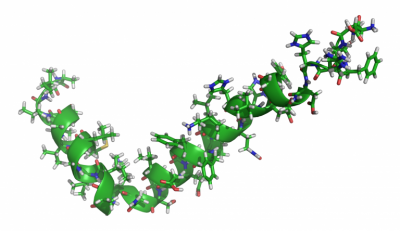
Amyloid Peptide Plaque
Blennow 2010, Lewczuk 2015, Lame 2011
More than 50 million people in the world are reported to have dementia (Alzheimer’s is developing in 2/3 of the patients). This number is expected to reach 76 million in 2030 and 133 million in 2050. Another upcoming problem is that the elderly population in the coming years has risen with an increasing momentum in the world.
If we come to the situation in Turkey, more than 600 thousand people are known to combat the disease. According to the data of TURKSTAT, the population over 65 years has increased by 21% in the last 5 years and its share in the total population has reached 9% in 2019. With this trend, the rate of elderly population in the population will reach 10% in 2023 and 13% in 2030.
After making this entry about Alzheimer’s, we can proceed to the research and results on Turmeric.
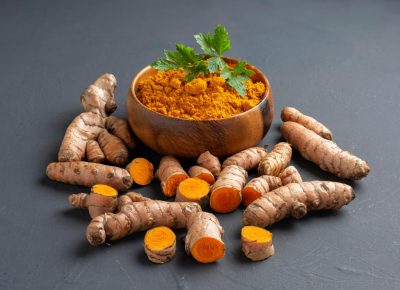
This spice, which is called turmeric, namely “castor saffron”, has been used in Asian countries, especially India, for 2500 years. The active curcumin ingredient has been found, as a result of the studies, it has decreased the rate of catching Alzheimer’s by 4.4 times in individuals aged 70-79 compared to America.
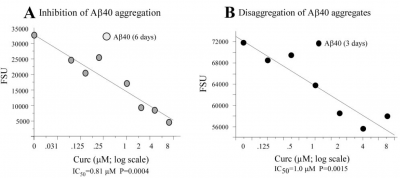
The image below shows a graph of how curcumin reduces amyloid plaques in mice with Alzheimer’s. Graph A shows that curcumin prevents these plates from joining together; In the B graph, it means that the plates formed by joining before and the larger pieces were broken.
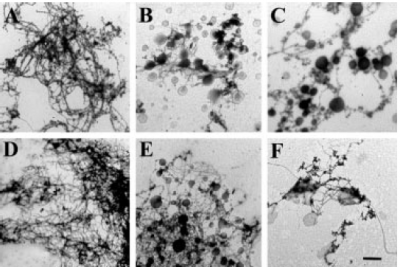
The image below shows how different amounts of curcumin bind amyloid plaques. In other words, we can state that the graphic given above is a visual representation. Decreases from A to F have been promising for the medical world.
Another research area in which turmeric is the subject is its effect on the immune system. Our macrophage cells are responsible for protecting us by digesting disease-causing microorganisms and other undesirable compounds.
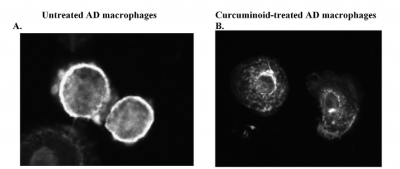
Research conducted at UCLA in 2006 shows that curcumin, which is the active compound of Turmeric, has started to clean these plates in the brain by activating macrophage cells.
In the image A., it shows the macrophage cell of an individual with Alzheimer’s. The bright area around it is the amyloid layers. In the image B., it is seen that the macrophage cell activated with Turmeric cleans the bright area around it.
As a result; The positive effects of turmeric on Alzheimer’s are getting more and more attention in the scientific world. However, it is worth noting that regular use for a long time is important in order to see these positive effects. Although it is beneficial to include this spice in our lives more, we all have to support our brain with active life, additionaly to give up or limit smoking and alcohol and pay attention to what we eat.
References
Shrikant M. and Palavinelu K. The effect of curcumin (turmeric) on Alzheimer’s disease: An overview. Annals of Indian Academy of Neurology (2008) 1-13
L. Zhang et al. Curcuminoids and amyloid-β uptake by macrophages of Alzheimer’s disease patients. Journal of Alzheimer’s Disease 10 (2006) 1–7