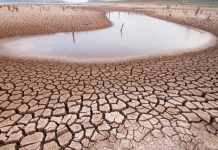

There are many researches about global warming. If no measures are taken, it is predicted that serious consequences will await human beings. In fact, the effects of global warming have caused floods, droughts, loss of seasons, etc. and began to make itself feel for the past 20 years with other extraordinary events, creating permanent damage on nature and living things.


Global warming is caused by greenhouse gases (carbon dioxide, water vapor, methane, nitrogen oxide and ozone It doesn’t mean that greenhouse gases are bad because if these gases didn’t exist, we would become an ice desert since the heat coming to the world could not be kept. The problem today is that this gas composition begins to change, because we destroy the environment. Some models are made to see these changes. Studies show that the atmospheric carbon dioxide level (550 ppm) in 2050 will rise considerably above today (414 ppm).

So, is the deterioration of natural balance only manifested by weather events?
Absolutaly no. Since the most obvious changes occur in the above-mentioned natural phenomena, it can take time to perceive smaller developments.
What effect does global warming have on nutritional compounds?
Studies on this subject are very limited, but it has been started to examine what changes in the nutrient content of some crop species (rice, wheat, etc.), especially the greenhouse effect, increases in carbon dioxide level.

In the study carried out by the University of Melbourne at 550 ppm carbon dioxide level for bread wheat; 10% reduction in iron, 22% in zinc and 15% in calcium were detected.
Especially in cereal products, there are other reasons, as well, for the reduction of microelements such as iron and zinc, besides rising of carbon dioxide level in the atmosphere. For example; grains in soil fertilized with high phosphate and nitrogen have been discovered that their ability of making iron and zinc reduce.
According to World Health Organization 2007 (WHO) data, more than 2 billion people are deficient in iron (Fe) and zinc (Zn). However; It is estimated that 400 thousand children die every year due to zinc deficiency in regions where wheat or rice is consumed as the main nutrient. In the case of iron deficiency, anemia and psychological disorders and decreased ability to do physical work were observed.
Research conducted by Soutwestern University shows that the protein content of wheat, barley and rice products may be 10-15% lower than its current value if CO2 reaches the predicted level in 2050 and all other parameters (soil mineral balance, etc.) remain stable without any changing. In the same study, it was found that protein loss was higher in wheat grown in soil containing nitrogen.
In a similar study on the protein content in rice at the Yangzhou and Bonn Universities, it has been determined there has been a decrease in the amount of protein. Explaining to the meaning of protein, they are large compounds made up of amino acids. So the quality of a protein is measured by the variety of amino acids in its content.
Amino acids can also divided into two groups ; those that cannot be synthesized in the body and must be taken from outside are called “essential amino acids”, and those that are synthesized in the body are called “essential amino acids”.
In another study conducted to determine the total amount of amino acids (essential + non-essential) in rice; In cases the carbon dioxide level is increased to 600 ppm, it has been determined that there is a 30% decrease in essential amino acid ratios such as lysine, threonine, methionine, phenylalanine, leucine and isoleucine.
Consequently; although studies in this area are very recent and limited, they are to bring important data on a subject as well. The nutrition of wheat and rice, one of the most consumed grains, decreases due to the increase in the level of carbon dioxide in the atmosphere and the level of carbohydrates increases. It is anticipated that the rise of carbon dioxide in the coming periods will cause similar results in other grain groups.
Referances
G.D, Robin., K. Marija., W.M, Ross. How much nutritional iron deficiency in humans globally is due to an underlying zinc deficiency: Advances in Agronomy, Volume 112 (2012), p7
Fernando et al., Rising atmospheric CO2 concentration affects mineral nutrient and proteinconcentration of wheat grain: Food Chemistry 133 (2012) 1307–1311
L, Mark et el.The impact of elevated CO2 on the elemental concentrations of field-grown rice grains: Field Crops Research 88 (2004) 279–286
T.R Daniel., M. Brian., A. Holly. Effects of elevated CO2 on the protein concentration of food crops: a meta-analysis: Global Change Biology (2008) 14, 565–575
Wang et al. The impact of atmospheric CO2 concentration enrichment on rice quality – A research review: Acta Ecologica Sinica 31 (2011) 277–282